
Portfolio
Advocating for Year 10 - Visual Communication Design
Image Sources: https://unsplash.com
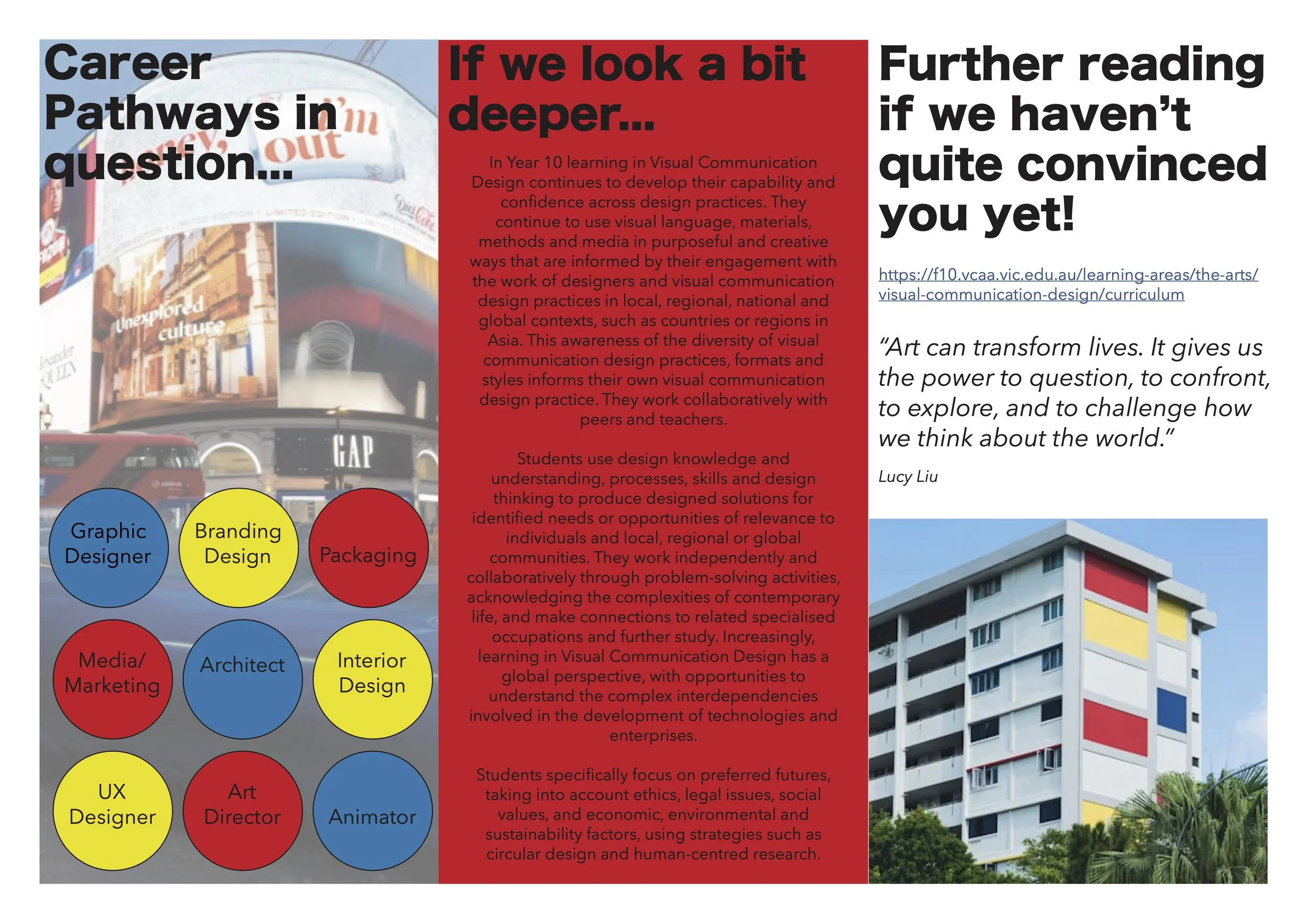
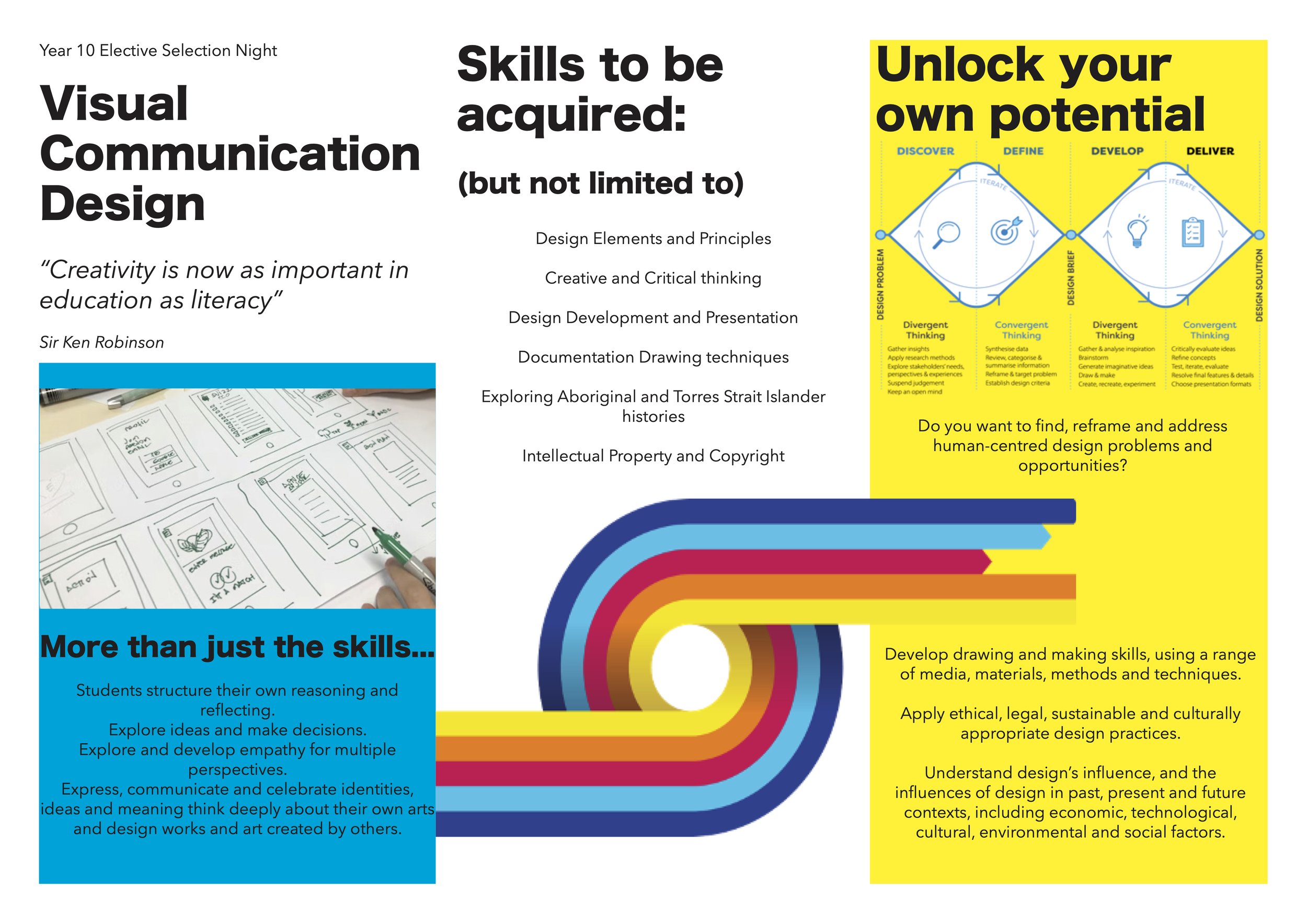
Rationale behind the pamphlet
The pamphlet I have created to advocate for Visual Communication Design at a Year 10 Elective Selection night, is targeted at both Parents and Students. The language incorporated is partly colloquial to capture the audience’s attention, and selected headings have been written intentionally with a fun tone to talk to the Arts positively and in a purposefully engaging way. With the aim of displaying the fun and creative style of teaching that would be shown to students every lesson, pushing students outside of their comfort zones.
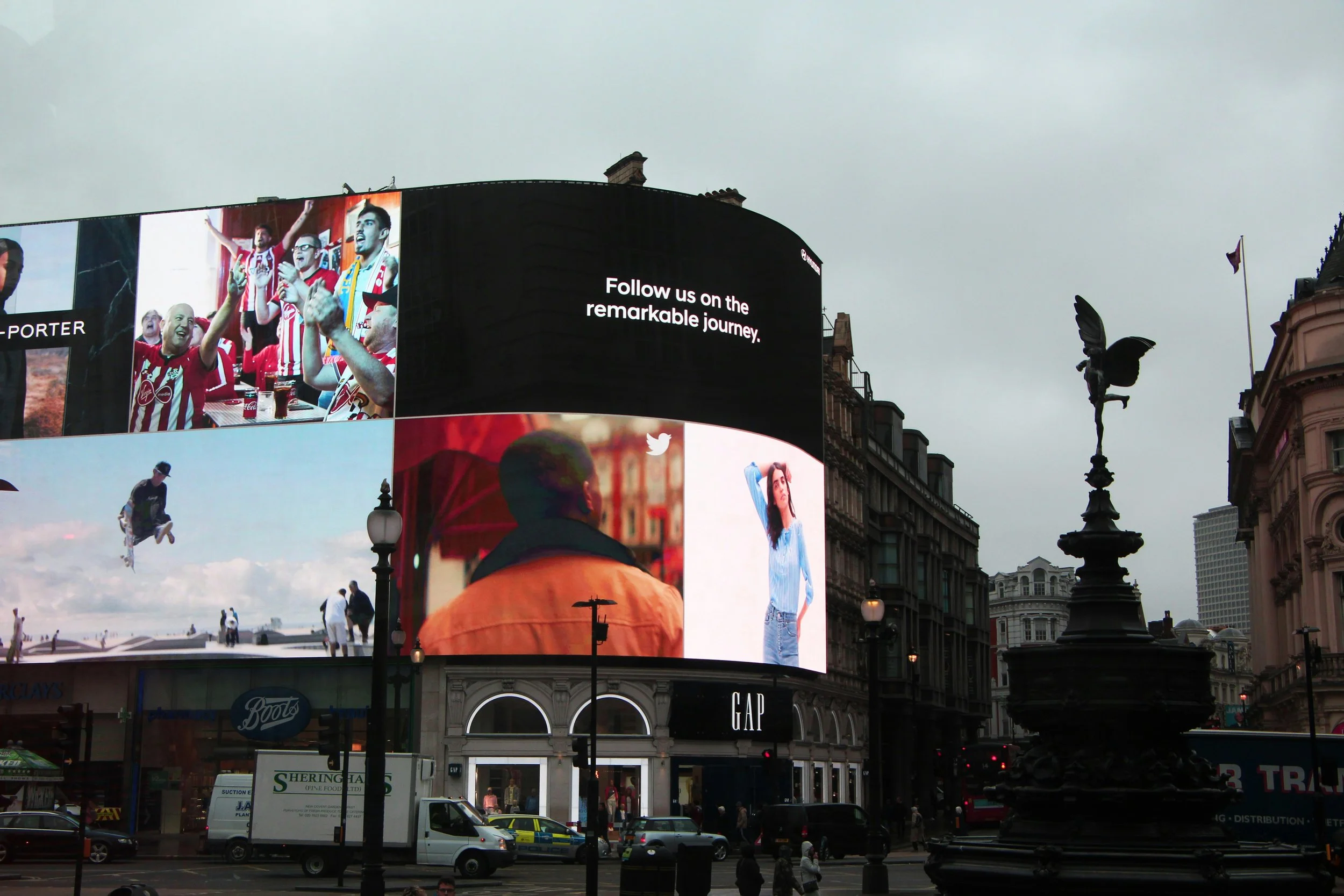
The integration of inspirational quotes were chosen quite intentionally with the goal of sparking inspiration and thoughtful consideration as to why the Arts is such a beneficial learning area, Visual Communication design specifically. The visuals chosen vary based on sources and reasoning, however these were chosen purposefully to include each stage of the VCD design process visually. Gathering inspiration from real-world examples, development of ideas, digitally designing artworks, and most importantly integrating the most useful resource for the subject area, being the double diamond design process which students require a solid understanding of before progressing into VCE.
This design was inspired by Piet Mondrian given his work is based on the three primary colours of Blue, Red and Yellow, mainly emphasising the design elements of colour and type throughout. This idea created a consistent colour palette throughout the design of the pamphlet, therefore assisting with the visual layout of the design and ensuring this remained really consistent. This theme stemmed from a Piet Mondrian inspired resource that was embedded in a VCE summative assessment I witnessed being taught on placement. The students were fascinated by his works, and I believed integrating the work of successful artists will only drive more students to push their creativity - by showing the possibilities of what is possible in the arts, at a subject selection event based on their future.
All information was taken directly from the Visual Communication v2 Victorian Curriculum website which is outlined at the Year 10 standard (Year 9-10 band). However I wanted to express this information differently, and while the standards have been covered, they have been simplified for students to easily read and comprehend exactly what skills are involved. Along with explicitly outlining the future job opportunities, that can come from this subject area. The middle page at the back of the pamphlet however, coloured in red is where all information has been clearly stated. While the remainder of the pamphlet involves minimal text, it was important to ensure the information was stored there for parents to refer back to, given this pamphlet is a tangible resource. I believe this particular explanation from the VCAA website described the processes of VCD very effectively, and could act in giving parents a useful overview if they were unsure of the subject if it wasn’t an area they were interested in themselves. This will only continue to advocate for the themes explored in Visual Communication as being extremely relevant to building key foundational skills.

Curriculum-aligned assessment task
Year 10 Summative Assessment - Branding Design
This summative assessment designed in line with the Year 9-10 curriculum explores how students can experiment with visual language, methods, media and materials to generate and develop design ideas and concepts (VC2AVC10D01). Using the design process they will learn to reflect, analyse, evaluate and document their own design ideas to inform their decisions, ultimately achieving the refinement stage of their final design for presentation (VC2AVC10D02). Students will be encouraged to investigate and gain inspiration from a range of designers who use visual communication to communicate their own cultural ideas and other contexts (VC2AVC10E01).
Students will be guided to respond to a design brief (inspired from the Target Learning resources), simplified from a VCE Unit 1 assessment task, to ensure the students are exposed to the increasing level of output required at the VCE level of this subject. The assessment has been amended to sit in line with the above curriculum, ensuring it is achievable at a Year 10 level. With emphasis on completing each stage of the design process - students will conduct research, gather inspiration, define their intended design solution, develop ideas, and deliver the final result. The final product required is an A3 poster in presentation format, showcasing the logo (full colour, grey-scale and black and white), as well as detailing the typography elements, and colours included.
The purpose of this summative assessment result is to inform the teacher of the students' level of mastery in each curriculum area. The final A3 poster will be an indication of how well this process was understood and applied to the design problem outlined in the brief, and the students’ critical and creative thinking which led to solving this. Their folio pages will be required for submission to understand the level of output against each phase of the design process. This will ultimately inform the teacher when marking in terms of whether students require more focus on a particular area, or whether there are common themes of knowledge gaps, which may mean they are needing to be re-taught these skills applying a different pedagogy.
The skills reflected and level of output shown will be determined by how each phase is explicitly taught in the lead up to the summative. The sequence will be implemented using a scaffolded practice given “teaching that manages cognitive load begins with a clear explanation, and new material is broken up into small, manageable chunks with well-defined goals (Rosenshine, 2012).” Therefore a worked example from the Target Learning resources will be used as a guide throughout the sequence. Introducing this will strive for consistency in the final branding/poster produced by the student group. As students respond to the design brief, it is crucial to check for their understanding by incorporating methods such as getting students to participate in shared reading of the brief, and highlighting the key ideas that are discussed by producing a mind map as a class. While students’ idea generation is open to their own interpretation, setting the task up with clear instruction and direction to follow, will allow students to be guided as accurately as possible. This is important, as Caviglioli & Goodwin suggests “if students create incorrect connections, they may inadvertently create or strengthen misconceptions (2021).”
The completion of this sequence will determine whether this timeframe was adequate enough to cover off this content and prepare Year 10 students accordingly. As the learning sequence unfolds, it will be crucial to consider Schon’s reflective practice and reflect in the moment, through understanding the feasibility of the work being taught in order to ensure these time constraints and level of difficulty were appropriate. Then it is even more important to reflect after the sequence has completed, and gauge whether any alternate teaching strategies could have been integrated with the teaching practice, to achieve deeper engagement levels with the summative assessment task.
Presenting a Rationale
The resource produced to accompany an Isometric Drawing learning sequence in Assessment Task 1 explicitly set the expectations for the level of output required at a Year 9 standard. The resource modelled the correct process students had to follow to adequately achieve the learning objectives and success criteria of the sequence - which was informed by the Victorian Visual Communication curriculum at a Year 9 standard.
With the aim of eliminating misconceptions of the task, and assisting students in understanding the requirements across the sequence.
The High Impact teaching strategies outline that the correct implementation of a worked example ,ultimately assists in “scaffold[ing] the acquisition of new knowledge and skills by presenting students with a clear, step-by-step example.”
Without guided practice, and implementing an ‘I do, we do, you do’ approach, this could lead to disengagement in the classroom and encourage students to go off task with the lack of direction they have received. While the gradual release of responsibility, gives students the confidence to understand what is required of them for their final design.
Explicitly teaching the content through the use of a worked example, using a projector to display this resource to the class - allows the teacher to display which key skills are required to use in each stage of the design process. “Clearly show[ing] students what to do and how to do it.” as the High Impact Teaching Strategies suggests (2017).
Class discussion stems from this in the form of commentary or questions, which aids in students building trust amongst their peers, and promotes deeper understanding through student ownership of their learning. As students ask questions it is important to link these back to how the resource is addressing the learning objectives and success criteria of the sequence, as their focus is to be achieving these standards.
While being cautious not to overwhelm students, this resource will be built on throughout each lesson - when the focus of the lesson is that particular part of the process. As AERO states this “minimise[s] the risk of cognitive overload that could interfere with students’ retention of new knowledge and skills.”
Relating to the Design process
If the completed resource was displayed straight away, without being scaffolded within the sequence appropriately it could have a profound impact on student output. It may reduce their capacity to think beyond this idea, or it may limit the belief in themself to complete something of the same standard. While it could serve as useful inspiration for some students, the risks outweigh the reward in this instance - hence why integrating a step by step process and scaffolding this instead based on the design process is the more effective approach. Given that also throughout the creation of this resource, the consideration of inclusivity was present.
The worked example would be an at-standard representation that guides students to achieve that level. So if students do require differentiation strategies, it is important that this is addressed to meet each learner at their point of need.
Another key consideration was educating students on the importance of cultural considerations within design, and not only exploring how we can integrate this within our work, by educating themselves on the resources available to appropriately apply to their design work.
However the overall purpose of the resource is to generate responsive teaching on my part by actively observing the understanding and learning taking place. Ensuring I would adapt instruction based on the students’ needs, interests, and understanding in real time. This generates the opportunity to check for their understanding and hold them accountable to be responsible for their own learning. Incorporating techniques such as no opt-out questioning when completing these demonstrations, is a really effective way to use other students’ responses to ‘follow on’ or incorporate ‘bouncing’ with the learning - through question themes & threads. Leaving the students’ thinking and sparking inspiration for what they will complete for their own final product.
Critical Thinking as a means of Reflection
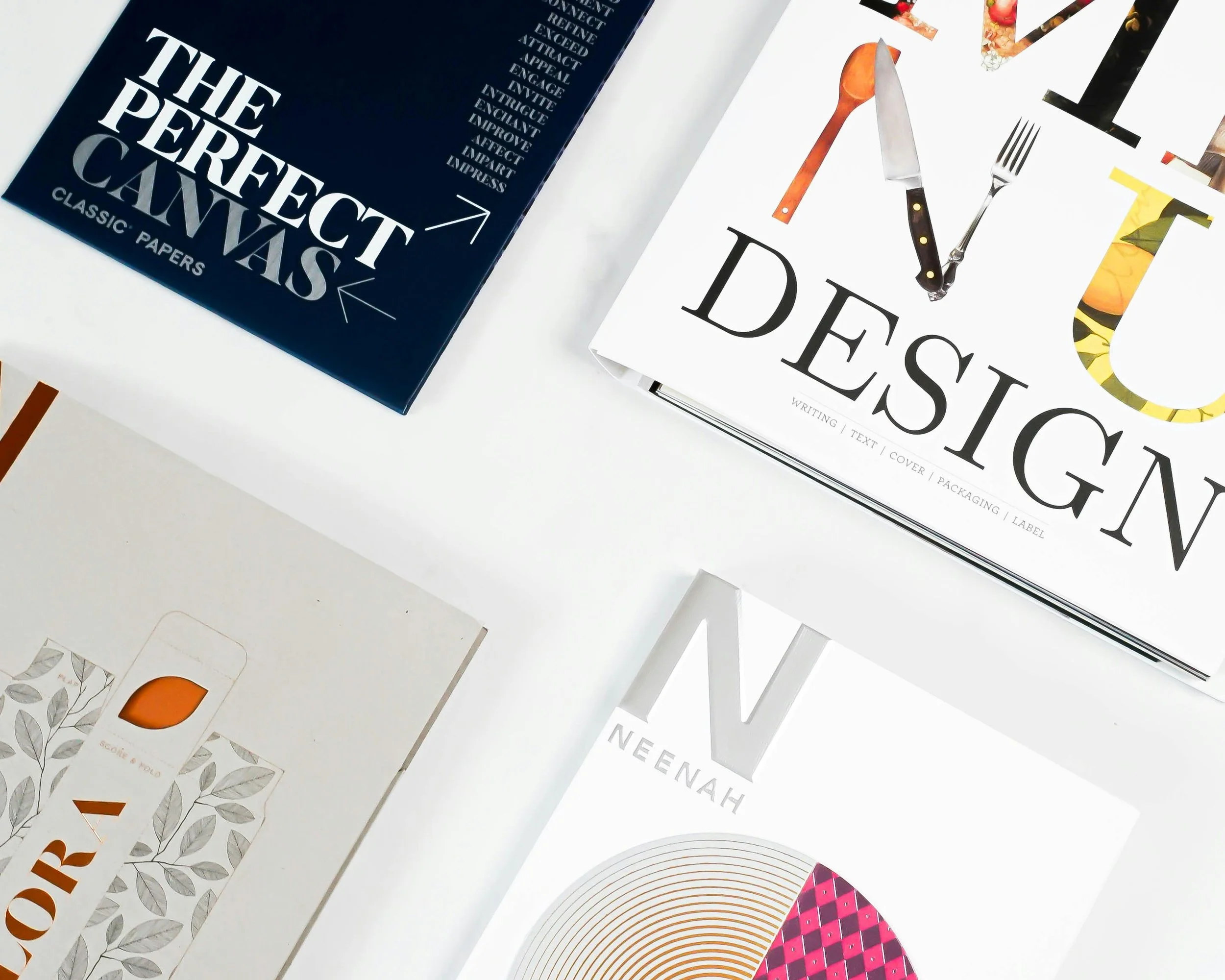
The process of receiving feedback on our summative presentations has pushed me to grow as a pre-service teacher in the arts to enhance my work further through the use of collaborative learning. As per the High Impact Teaching Strategies (2017) when students “share [their] expertise” and “ensure each student’s contribution is valued by other students” this is how we can continue to learn through each other's varying perspectives. With the ideas of expressionism and individualism in the design field, this helps us to push the quality of our work as arts students, however in a group we are able to improve this exponentially as ideas can be shared and pushed further. I received feedback from Erin, Catherine and Sam A which has given me new ideas on how to implement this lesson more effectively. For example Erin suggested breaking this complex idea down further and considering the integration of lego/duplo blocks at the beginning of the lesson, which would act as an interactive activity to commence the lesson and create discussion amongst the class based on their observations. I also really appreciated Catherine's suggestion of including written annotations or explanations on my resource to display to students that I use critical thinking to evaluate my work also, and I am modelling the correct process to them.
The process of evaluating peers on their summative presentations through critical thinking strategies allowed me to consider varied thought processes. This is an extremely important skill to learn as an arts educator to ensure we are always viewing the work based on their reasoning behind it. Applying feedback to their reasoning works to assist in pushing their divergent and convergent thinking even further.