

Assignment 2 - ECA732
Portfolio
Curriculum Informed Professional Statement
I have designed this Unit 3 sequence, Collect, extend and connect, as one continuous inquiry rather than three separate blocks. The VCE Art Making and Exhibiting Study Design 2023–2027 organises the unit into three areas of study, and I have woven them together through a single thread. Students choose three artists working in a specific art form (Collect), use them as inspiration to make at least two artworks and present a critique (Extend), then curate a six-work exhibition proposal drawn from the same artists (Connect). This approach is consistent with VCAA assessment advice (Victorian Curriculum and Assessment Authority). The Visual Arts journal is the single evidence store, so research, experimentation, reflection and authentication are part of everyday practice, not a final task (VCAA, 2023, 2025).
I planned using backward design (Wiggins & McTighe, 2005) and constructive alignment (Biggs & Tang, 2011). I began with the outcomes, key knowledge and key skills, identified the evidence students must produce, and only then designed the learning tasks. The sequence runs for about 50 hours (VCAA, n.d.) across six phases: launch and collecting; research and exhibition visit; experimentation and development; making and critique; curating and proposing; and consolidation towards Unit 4. I have placed the exhibition visit early on purpose to ensure students can visualise curatorial and design decisions before making their own work, then draw on that evidence when designing their own proposal.
The teaching of this sequence will be inquiry-based, reflecting on the study design's inquiry learning approach. Students will intentionally ask questions about ideas, materials and audiences, investigate through research and experimentation, and reflect in their journals. Within that, I will apply the gradual release of responsibility model (Pearson & Gallagher, 1983). As I model artist analysis, technique studies and reflective annotation, we practise will together, and students then work independently on their own subject matter. Feedback strategies will be timely and specific (Hattie & Timperley, 2007). Short annotation routines after each experiment, a mid-unit journal checkpoint and the Outcome 2 critique will provide students with information they can use while it can still change their work. I structure the critique around successes, challenges, recommendations and future planning (VCAA, 2024), so it also becomes the bridge into Unit 4.
A First Nations focus is not a single lesson or a set of case studies added at the end. The VCAA encourages teachers to integrate Aboriginal and Torres Strait Islander knowledge and perspectives in the design and delivery of the program (VCAA, n.d.). This focus will also address Standards 1.4 and 2.4 of the Australian Professional Standards for Teachers (Australian Institute for Teaching and School Leadership [AITSL], 2017) and supports Victoria's Marrung: Aboriginal Education Plan 2016–2026 (Department of Education and Training, 2016). This plan will continue to evolve throughout my journey as an educator, and I intend on staying informed with its updates to ensure my teaching practices continue to align appropriately.
It is also a disciplinary decision, that collecting, place, materials, memory and curating are central to the study, and First Nations artists such as Maree Clarke, Lorraine Connelly-Northey and Tony Albert are leading practitioners in each. A sequence of these ideas that left them out would be incomplete art education.
Tyson Yunkaporta's 8 Ways framework was developed through research with Aboriginal community members in western New South Wales. It describes eight interconnected pedagogies: story sharing, learning maps, non-verbal, symbols and images, land links, non-linear, deconstruct/reconstruct and community links (Yunkaporta, 2009; Yunkaporta & Kirby, 2011). I will implement this as a starting point for dialogue, not a checklist, because every place and every group has its own pedagogies. The eight ways are also not just steps to follow – they interact and I intend on using them together.
Story sharing: Students begin with a personal "brain dump" and a place statement. They learn each artist's practice as a narrative, and the critique becomes a story of how their work developed.
Learning maps: I map the six phases visually for students. They use journal spreads, thumbnails and exhibition floor plans to picture their pathway.
Non-verbal: Material tests, technique studies and making let students think through their hands. Connelly-Northey's transformation of wire and corrugated iron is a model.
Symbols and images: Students analyse how artists use visual language to communicate ideas, and annotate images rather than describing them only in words.
Land links: Students identify the Traditional Owners of our school's Country and respond to place. Visits to exhibitions and artists who work from Country ground the learning in place.
Non-linear: Journals move between artists, experiments and reflections. Students are encouraged to combine influences and revisit earlier ideas in unexpected ways.
Deconstruct/reconstruct: We start from the whole, a finished exhibition or artwork, then break it into curatorial, material and design decisions before students rebuild these in their own work.
Community links: Guest artists or community respondents, ethical curatorial proposals and consultation with artists or communities connect the learning to real audiences and obligations.
This matters for four reasons. First, the study is already narrative, visual, hands-on and place-based, so the 8 Ways strengthens what the discipline demands. Second, it moves us beyond teaching about Aboriginal and Torres Strait Islander people towards teaching through culturally responsive pedagogies, which reduces tokenism and makes learning more visible and accessible for all students, including First Nations students. Third, it supports ethical practice. Students learn to respond to an artist's ideas and methods without copying designs or sacred imagery, and to respect Indigenous Cultural and Intellectual Property. Fourth, because the framework emerged from particular communities, I will seek guidance from local Traditional Owners and Koorie education colleagues so the sequence reflects our own Country and not a generic model.
Taken together, the sequence gives students a coherent inquiry from collecting ideas to presenting them, while a First Nations focus shapes how they learn, what they study and how they act as makers and curators. The aim is for students to make and create thoughtful artworks and also understand the responsibilities that come with engaging with other people's cultures and knowledge appropriately and respectfully.
Art Making & Exhibiting
Unit 3 - Planner
Collect, extend and connect
Analysis of Inclusive Practice
〰️
Analysis of Inclusive Practice 〰️
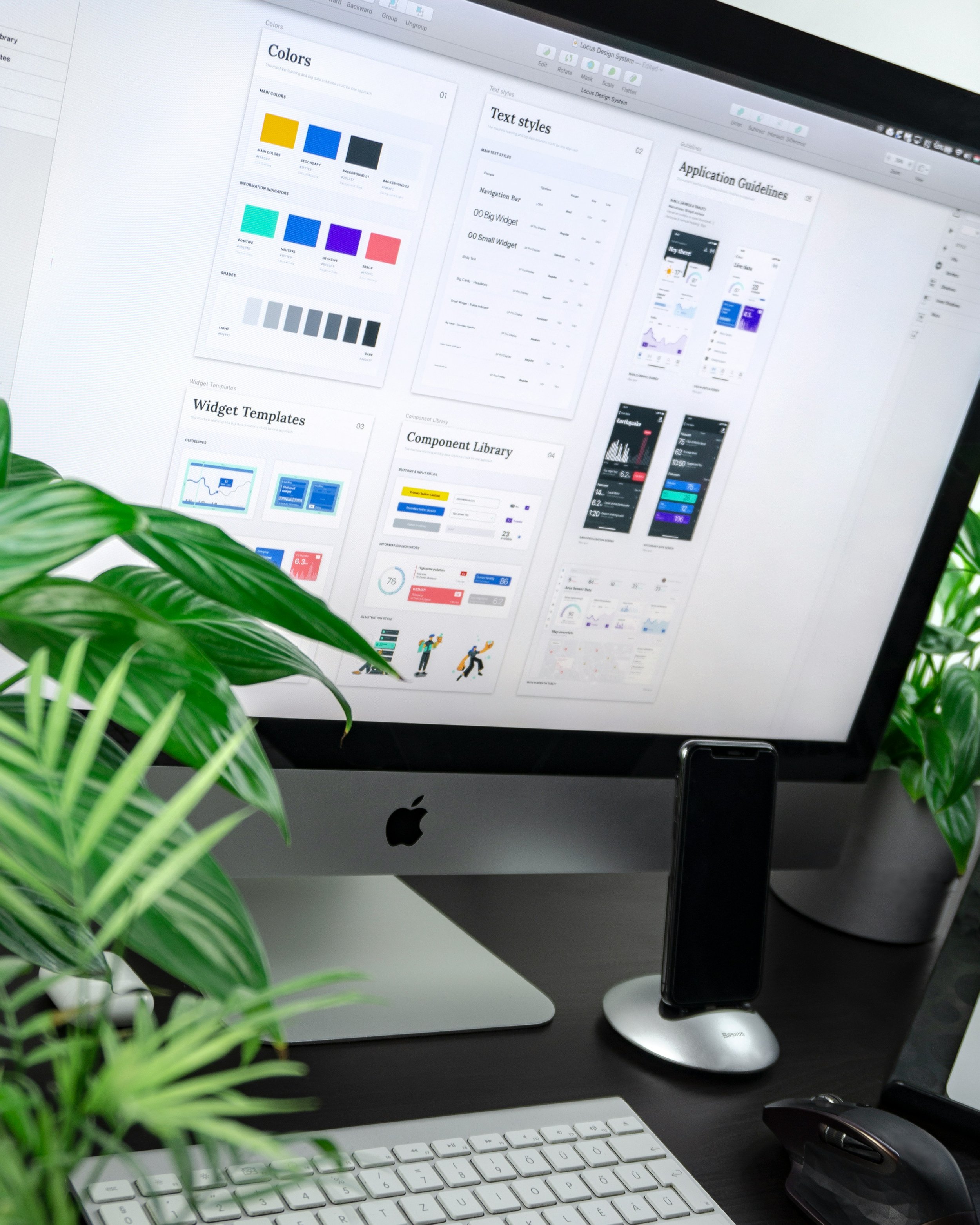
I would build the website as a navigable version of the six-phase sequence, so students can see how each task links to their journal and assessment. Each phase will include modelled demonstrations of technique and annotation that support gradual release, and embedded checkpoints will provide formative feedback. Students build ICT literacy by evaluating sources, photographing their work, curating digital journals and potentially through tasks such as exploring exhibition floor plans. Virtual exhibition tours and online collections extend learning for students who cannot easily visit a gallery.
Relevance and inclusion come from choice and first-voice content. Students choose their art form and artists from theme clusters. Artist statements, interviews and community-controlled sources keep the First Nations focus on every page, alongside clear Indigenous Cultural and Intellectual Property protocols.
For differentiation, each phase page would offer a core pathway suitable to every student of varying artistic skills and abilities, by scaffolding (sentence starters, annotated worked examples, journal templates) and extension tasks (comparative analysis, curatorial theory). Content would appear in several modes, with captions, transcripts and audio. The site would follow accessibility practice such as including alt text, high contrast and screen-reader compatibility, in line with Universal Design for Learning.
Embedded resources may include:
AIATSIS Map of Indigenous Australia for place statements
technique demonstration videos
an illustrated glossary with audio
student-friendly rubrics
floor-plan and label templates
a critique feedback form
Together, these provide every student with an entry point, a challenge and a way to display their learning.