
Lesson 2
Completing Isometric Drawing and introducing Rendering
Focus
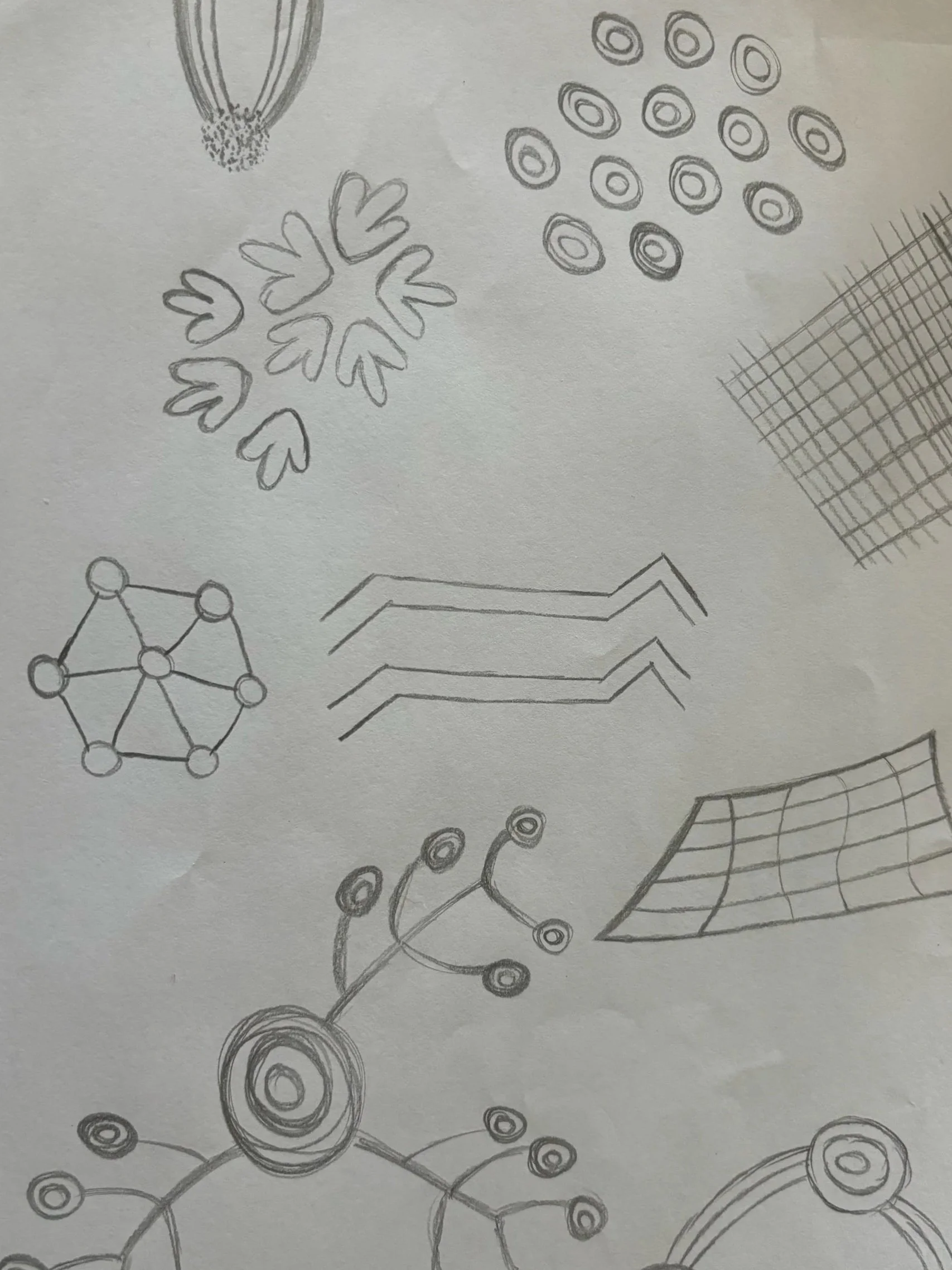
Integrating Aboriginal & Torres Strait Islander inspiration
Skills
Rendering
Idea Generation
Development
Link to previous lesson & Lesson aim: Completing Isometric Drawing and introducing Rendering
Tuning in/Warm up:
The lesson will begin with students having an A3 sheet on their desk, and as a group the class will discuss the AGSA Essential Introduction to Aboriginal Art pdf. Students are tasked with finding inspiration from this as we discuss Aboriginal and Torres Strait Islanders’ ways of incorporating art & design to physical objects, and their inclusion of patterns in their work. Students will be asked to use inspiration to incorporate a pattern within a section of their Robot later into the lesson (similarly to the first video the students were shown from Oliver Nueland where his design incorporated a NZ pattern). The lesson will then flow into this Rendering Video (2021 Visualisation and rendering resource) from Olivier Nueland, as well to demonstrate how this is to be correctly completed for the remainder of their Robot. Outline just one panel of the Robot is to include the pattern, however the remaining Robot is to be rendered. Using the projector, the teacher will then demonstrate the skill of rendering, and physically show how they can achieve shaded rendering effectively based on a light source - building the colours from light to dark.
Body/main task:
Once students have comprehended the worked example they will either complete the structure of their Robot drawing/ or begin the rendering/pattern component of their Robot. The teacher is to closely monitor how students are tracking and encourage students to move to the rendering/pattern component as soon as possible. Ensuring they will have enough time to complete their work with as much detail before moving onto the computers. While it is natural for students to work at different paces, and acceptable that some will require the additional time. It is crucial that the teacher is communicating the importance of working as efficiently in the lessons as possible to complete work to a satisfactory standard, given this piece of work will be used as the formative assessment. This will provide an indication into where the student is at, in terms of their understanding of what is required within the curriculum and their abilities.
Clean up/pack up:
Students are to hand work to the teacher to understand how they’re applying relevant skills. A Formative Assessment evaluation will be conducted by the teacher, to determine students who may require additional support, and all students capabilities with this particular task to date. This is predominately to highlight the students work positively, and indicate who is producing high quality design work using critical thinking, showing a solid understanding of technical drawing and integration of Aboriginal & Torres Strait islander inspiration into their work. Importantly, students will be assessed according to their physical/cognitive abilities, promoting an inclusive learning environment that allows students to succeed based on their individual efforts/capabilities.
Lesson conclusion/student reflection:
How far along are the students, and are students ready to be able to commence their work on the computers in the following lesson. Formative Assessments to be the indicator.